The Yoga Aesthetic: How to Build a Practice (and a Space) You'll Actually Keep
If you searched “yoga aesthetic,” I think I know what you want: the calm corner, the soft morning light, a mat that looks like it belongs there, the outfit, the ritual, the whole feeling of being someone who practices. This guide gives you all of it, specifically and on any budget, from the mat to the playlist. It also gives you the honest part, from someone who started yoga entirely for the look: the aesthetic is the doorway, and the practice is the room. You can have both. You just need to know which one is which.
What people actually mean by “yoga aesthetic”
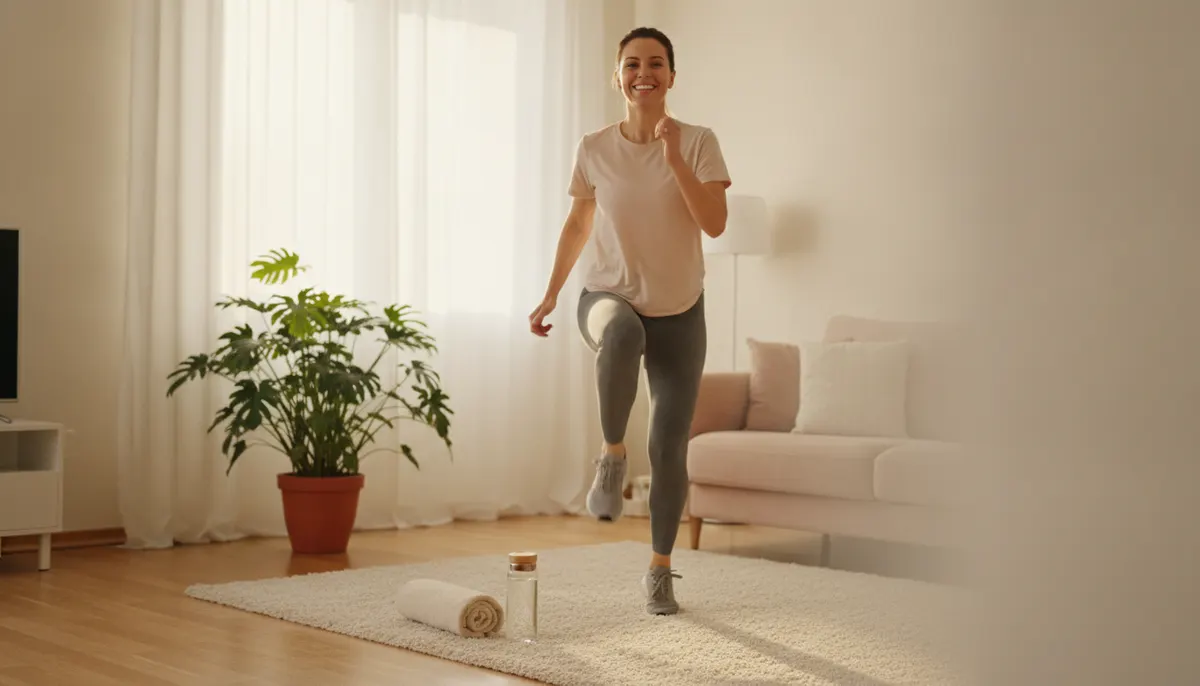
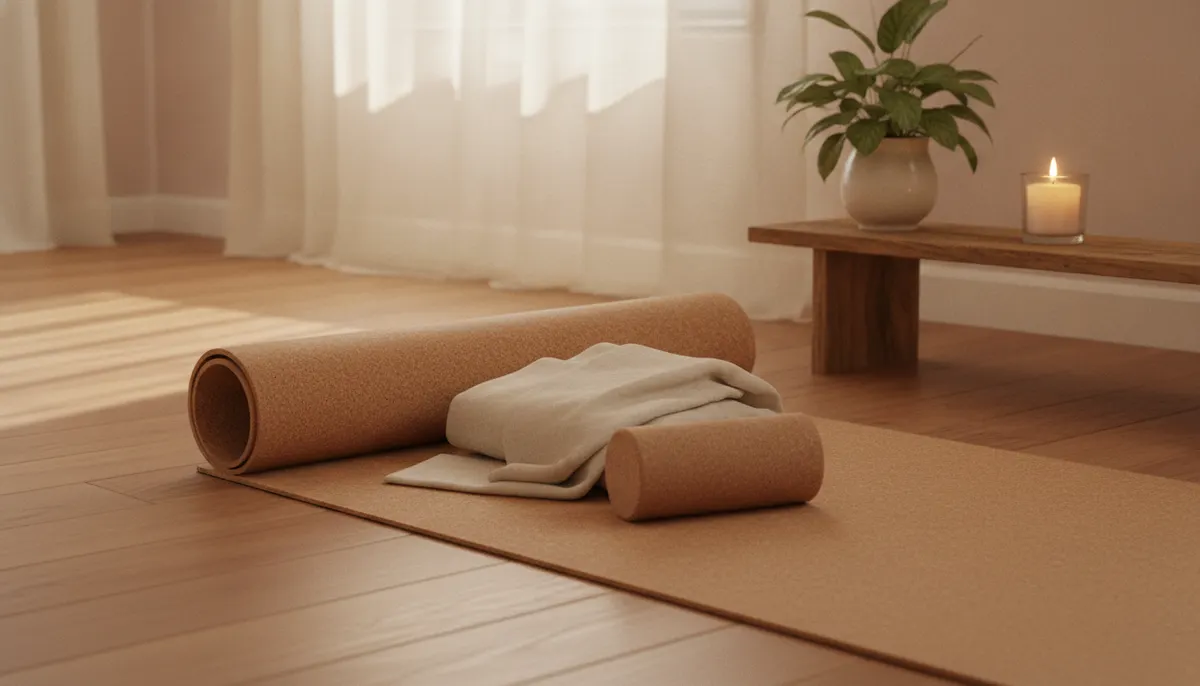
The yoga aesthetic is a mood more than a checklist. Picture a cleared patch of wood floor, a window with thin curtains, a cork or sand-colored mat unrolled and waiting. Two blocks stacked in the corner. A plant. A candle that is not lit yet. Someone sitting cross-legged in a matching set with their hair pulled back, eyes closed, not scrolling.
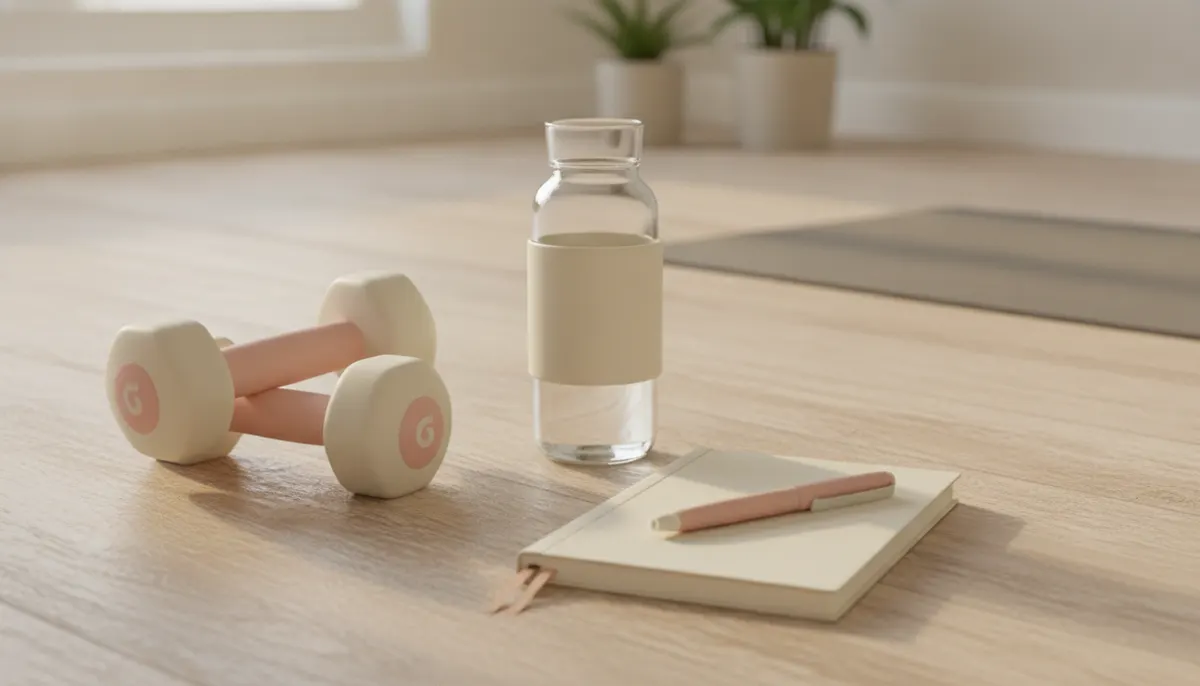
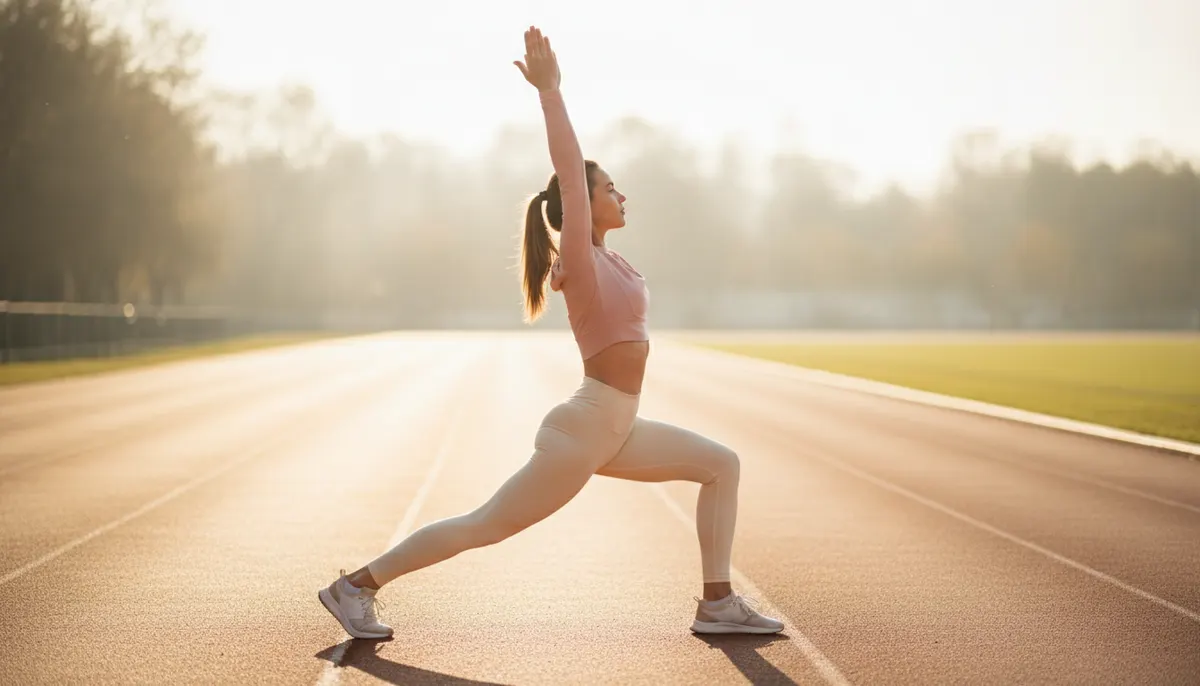
There are a few flavors. The yoga studio aesthetic is the big one: white walls, warm wood, folded blankets in neat stacks, bolsters lined up, plants that are clearly thriving. The yoga outfit aesthetic is the clothing side: soft neutrals, ribbed sets, bare feet, minimal jewelry. Then there is the lifestyle version, which adds matcha, a journal, and a slow morning.
Underneath all of it is one thing: calm on purpose. People are not really searching for a specific mat color. They are searching for a version of their day that has a quiet, intentional pocket in it. That is worth wanting, and it is also a good sign, because that quiet pocket is exactly what a yoga practice is.
Wanting the aesthetic is fine (I started there too)
I will say this plainly, because I think a lot of yoga teachers pretend otherwise: I got into yoga because it looked cool. The teachers I followed seemed to have the most amazing lives. I wanted the body, the lifestyle, and the enlightenment, in roughly that order. I wrote the whole embarrassing story in my essay on going from aesthetic to asana, including what my dad said when I told him I was going to teach.
Here is what matters for you: the look got me onto the mat, through a two-year teacher training, and in front of real students. Then, over years, the practice did its work on me from the inside. The order I came in did not disqualify me from any of that.
So if the aesthetic is your way in, use it without apology. Build the space. Buy the set if it makes you happy. The only mistake is confusing the doorway for the room, and the rest of this article is about walking through.
Building a yoga corner at home on any budget
You do not need a spare room. You need about six feet by three feet of floor that you can clear in under a minute, and a reason to return to it. Here is how I would set it up, piece by piece.
The space
Pick one spot and keep it. The same corner every time becomes a cue, the way the same chair becomes “the reading chair.” Near a window is ideal for light, but a wall you can use for Legs Up the Wall is just as valuable. Clear it of laundry and cords. If the floor is hard tile, a rug under the mat is kinder to your knees.
The mat (the one thing worth spending on)
If you buy one thing, make it the mat. A very cheap foam mat slides on hard floors and bunches under your hands in Downward Dog, which quietly makes you hate practicing. Look for 4 to 6 millimeters thick with a grippy surface. Natural rubber and cork feel great and look the part; PVC mats are cheaper and last for years. If you sweat a lot, a thin towel over the mat solves the slipping problem for a few dollars.
Props
Two blocks and a strap cover almost everything a beginner needs. Blocks bring the floor up to you in lunges and forward folds; a strap makes hamstring stretches possible for tight people (which is most of us). Substitutes work fine: a stack of hardback books, a bathrobe belt, a folded bath towel for under the knees, a firm couch cushion as a bolster.
Light
Morning light through a window is the whole aesthetic in one ingredient, and it costs nothing. If you practice in the evening, use a lamp with a warm bulb at floor level instead of the overhead light. Overheads make every room look like a waiting room. A candle is lovely; just keep it off the mat.
Plants, scent, and sound
One plant is plenty. A pothos or a snake plant tolerates neglect and bad light, which matters, because you will neglect it. Keep scent subtle: a lightly scented candle, a drop of lavender or eucalyptus on a tissue, or simply an open window. You will be breathing deeply, so anything heavy becomes unpleasant fast. For sound, make one playlist of slow instrumental music and reuse it until it becomes part of the cue. Silence is also an aesthetic, and I practice in it most days.
Storage (the part everyone skips)
The space has to stay ready, or friction wins. Roll the mat and lean it against the wall, or hang it on a hook, so unrolling it takes five seconds. Keep the blocks, strap, and candle in one basket. If the mat lives in a closet behind the vacuum, you will practice less. That is not a character flaw; it is just how friction works.
Three budgets
With zero dollars, you have a towel on carpet, two books, a belt, and a window. With about fifty, you have a decent mat, two foam blocks, and a strap. With a bit more, you add a cork mat, a bolster, a plant, and a warm floor lamp. All three versions support exactly the same practice, and I have taught people who stayed on the zero-dollar version for years.
The outfit question, answered honestly
The yoga outfit aesthetic is real, and I own matching sets, so I am not going to pretend clothing does not matter. But what makes an outfit good for yoga has very little to do with the brand and everything to do with four tests.
- The fold test: in a forward fold, does your shirt fall over your face? A fitted top or a tucked tank fixes it.
- The Down Dog test: do your leggings stay up and stay opaque with your hips in the air? High-waisted, thicker fabric passes.
- The breath test: can you take a full belly breath without a waistband or bra band cutting in?
- The floor test: no zippers, buttons, or back pockets with hard edges, because you will lie on them in Bridge and Savasana.
Beyond that: bare feet, hair tied back, nothing dangling. Fabric should breathe; soft cotton is fine for slow practice, while technical fabric is better for anything sweaty. Thrifted sets pass every test above just as well as expensive ones.
One honest tip that does work: keep one outfit only for practice. Putting it on becomes part of the ritual, the same way lacing up running shoes tells your brain what is about to happen. And one honest admission: I have practiced in pajamas hundreds of times, and the practice was identical.
Rituals that double as practice
The best part of the yoga aesthetic is that most of its rituals are already yoga. Done with a little intention, these four turn “the vibe” into the actual practice, in under ten minutes.
Morning light. Unroll the mat before you touch your phone. Sit in the light for ten slow breaths with your eyes closed, feeling the warmth on your face. If you want a structured start, a 15-minute morning yoga routine fits this slot perfectly and does not require you to be fully awake yet.
Breath. Try an extended exhale: inhale for a count of four, exhale for a count of six, for ten rounds. That is pranayama, the breath practice yoga is built on, and it is also the fastest way I know to feel like the calm person in the picture.
Journaling. One line before practice (“what do I need today?”) and one line after (“what did I notice?”). Two sentences, not two pages. The point is to practice from how you feel rather than from a plan, which is a skill that took me years to learn.
Closing. When you finish, roll the mat slowly, put your hands on your heart for three breaths, and then make the tea. Closing rituals tell your nervous system the practice was complete, which makes you more likely to come back tomorrow.
When the aesthetic gets in the way
I want to be careful here, because this is where the yoga aesthetic turns on people. It happens in two ways.
Comparison
The feed is full of still frames: a handstand on a cliff, a split in perfect light, a “yoga body” that seems to come free with the mat. My dad’s first impression of yoga was skinny blonde women running around with rolled-up mats, and the feed has not changed much since.
Here is what I know from inside those photos: still frames are not practice. I have pictures of myself in advanced poses that I still catch myself measuring my current practice against, and I teach this for a living. Real practice is dynamic, often unglamorous, and sometimes it is twenty minutes of Child’s Pose because the week was hard.
If scrolling leaves you feeling behind instead of inspired, that is data. Curating your feed, moving as a celebration instead of a correction, and changing the way you talk to yourself are all covered in twelve practices for learning to love your body. I needed therapy and a lot of small daily habits to get there myself, so I am not pretending any of it is a quick fix.
Shopping as procrastination
The other trap is waiting until the space is perfect. “I’ll start when the cork mat arrives.” The mat arrives, and now you need the right blocks. Buying is easier than practicing, and it feels like progress.
Two questions keep me honest. Am I practicing more or shopping more this month? And does my corner make me want to move, or make me feel like I am failing a photo shoot? If the answers point the wrong way, practice tomorrow on a towel, on purpose, and notice that it works.
From aesthetic to asana
Here is the part the aesthetic cannot do for you. Around day twelve, it will be raining, the light will be gray, you will be tired, and the corner will not look like the picture. That is the day the practice has to stand on its own.
So give it something to stand on. A simple plan beats inspiration, and three ten-minute sessions a week is enough to start. Choose a few poses you can do without thinking, link them to your breath, and repeat the same short sequence until it feels like yours. Progress in yoga shows up as steadier breath and less negotiating with yourself, not as a deeper backbend.
If you are not even sure yoga is the right fit, that is a fair question, and the answer depends on what you want from the hour. I wrote an honest comparison of yoga and pilates for exactly that decision; some people who love the yoga aesthetic find they really want the precision of pilates, and plenty of people happily do both.
You will know you have crossed over when a few things happen. You practice when the light is bad. You stop taking photos. You notice your breath in traffic. You start a session not knowing what you need and let the first few poses tell you. At that point the beautiful corner is still beautiful, and it is also beside the point, which is the best thing a yoga space can become.
Where to go next
Once the corner exists, the kindest thing you can do for it is use it, so start with a simple four-week plan for beginner yoga at home, which needs nothing more than the mat you now own. And if what drew you to the aesthetic was mostly the calm, yoga for stress and anxiety gives you the breathing and the poses that deliver it, no good lighting required.