The 10-Minute Abs Workout You Can’t Miss
Pair this simple abs workout with a longer cardio session, or use it when you only have a few extra minutes in your day for a workout.
Ten minutes is not a lot of time, which is exactly why this works. Most people skip core work because it gets tacked onto the end of a session that already feels long, and then it gets done badly or not at all. Give it its own ten minutes, do it with real focus, and you will get more out of it than twenty distracted minutes of crunches.
One honest note before you start: a circuit like this trains your abs to flex, twist, and move. The deeper job of your core is to resist movement and keep your spine steady while the rest of you works, and that side of the equation gets its own treatment in my guide to core stability exercises. Do both. This circuit is the quick, sweaty half.
The 10-Minute Circuit
Perform each exercise for 20 seconds, followed by 20 seconds of rest. Repeat the circuit twice, with two minutes of rest after you finish the first round.
- Plank with reach and crunch
- Toe touches
- Cross-body crunches
- Spiderman
- Russian twists
- Mountain climbers
The math is simple: six exercises at 20 seconds on and 20 seconds off is four minutes per round. Two rounds plus the two-minute break between them lands you right at ten minutes. Set a timer with 20-second intervals (most interval apps let you do this in a few taps) so you are not watching the clock mid-plank.
Form Cues for Each Exercise
Twenty seconds goes fast, and the temptation is to rush. Slower, cleaner reps beat fast, sloppy ones every time, especially for core work, where momentum will happily do the job your abs are supposed to do.
Plank with Reach and Crunch
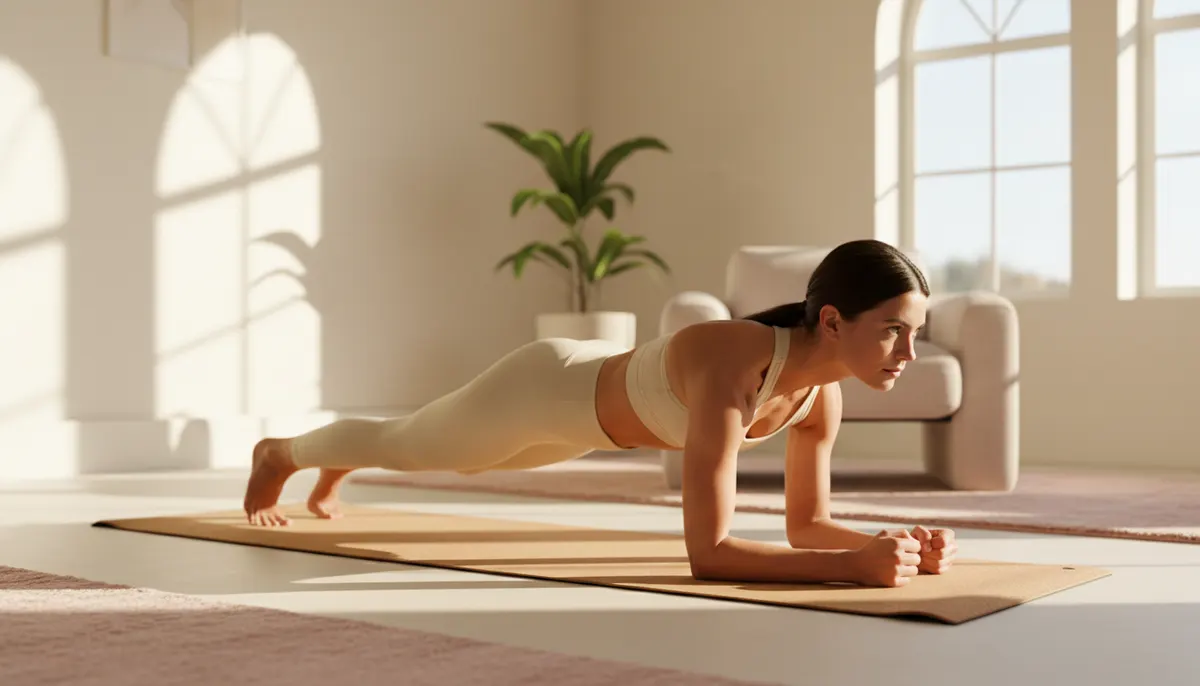
Start in a high plank, hands under your shoulders, feet about hip-width apart. Reach your right arm straight out in front of you, then draw your right knee toward your right elbow as you pull the arm back under your chest. Return to plank and switch sides. Key cue: keep your hips level the whole time. If they rock side to side, widen your feet a little.
Toe Touches
Lie on your back with your legs straight up toward the ceiling (a soft bend in the knees is fine). Reach both hands toward your toes, lifting your shoulder blades off the floor, then lower with control. Key cue: lead with your chest, not your chin. Your neck stays long and relaxed.
Cross-Body Crunches
Lie on your back, hands lightly behind your head, knees bent. Bring your right elbow and left knee toward each other as you lift, then switch. Key cue: rotate from your ribs, not your elbows. The elbow stays wide; the twist comes from your torso.
Spiderman
From a high plank, drive your right knee out and up toward your right elbow, keeping it outside your body, then return and switch. Key cue: squeeze your glutes so your lower back does not sag as the leg moves. Go slowly enough to feel the obliques on the working side.
Russian Twists
Sit with your knees bent and heels light on the floor (or lifted, if you want more). Lean back until you feel your abs switch on, then rotate your torso side to side, tapping your hands beside each hip. Key cue: turn your shoulders, not just your arms. If your lower back complains, keep your heels down and sit a little taller.
Mountain Climbers
From a high plank, drive one knee toward your chest, then switch, keeping your hips low and steady. Key cue: think about pulling the floor toward you with your hands so your shoulders stay stacked over your wrists. Speed is fine here, as long as your hips are not bouncing.
Common Mistakes
- Pulling on your neck during the crunch-based moves. Hands behind your head are a resting place, not a handle.
- Letting your hips sag or pike in the plank-based moves. Hold a straight line from head to heels on every rep.
- Holding your breath. Exhale on the effort (the crunch, the twist, the knee drive) and inhale on the way back.
- Rushing the 20 seconds. Count quality reps instead of chasing a number.
- Skipping the rest. The 20 seconds off is part of the program, not an optional extra.
How to Progress
Treat this the way you would treat any strength program: master it, then add one small thing. The same logic I use for sets and reps with beginners applies here. For your first few sessions, aim for clean reps and finish both rounds. Once that feels manageable, progress in this order:
- Add a third round (with two minutes of rest between each, so about 14 minutes total).
- Shift to 30 seconds on and 15 seconds off.
- Make individual moves harder: lift your heels during Russian twists, add a slow three-count lower on toe touches, or hold a light dumbbell for the twists.
Only change one variable at a time. If your form gets ugly, back off a step.
When to Do It
Two situations where this circuit shines:
After cardio. Your core is already warm and your head is already in work mode, so stacking ten more minutes feels easy. It pairs especially well with the 20-minute no-equipment HIIT workout: finish the intervals, rest two minutes, then run this circuit as your finisher. That is a complete 30-minute session with no equipment.
On busy days. If ten minutes is all you have, ten minutes of focused core work still counts. Do it in your living room before the shower, and move on with your day. If you want to build a short, intense session of your own around it, the HIIT formula uses the same on-and-off structure and works for almost any exercise.
Two or three times a week is plenty. Your abs recover like any other muscle, so give them a day in between, and let the stability work carry the load on the other days.