HIIT Training: How to Build Your Workout

It seems like everyone is doing HIIT, whether they’re in a workout class or working with a personal trainer, and there’s a good reason for it. HIIT, high-intensity interval training, pushes you to your max for a set period of time, with similarly timed breaks between exercises.
HIIT workouts keep your heart rate up, forcing you to work harder and therefore burn more calories. The benefits don’t stop there; HIIT training:
- Improves blood pressure
- Improves insulin sensitivity
- Reduces abdominal fat
Use this short and simple guide if you’re ready to HIIT the gym, but don’t know where to start.
Warm Up First
HIIT asks your body to go from zero to all-out in the first interval, which is exactly when cold muscles and stiff joints get hurt. Give yourself five to eight minutes of movement before the timer starts: march or jog in place, do slow bodyweight squats and lunges, swing your legs, and rehearse your first exercise at half speed. An 8-minute dynamic warm-up covers all of that and works before any workout on this page. Skip static stretching here; save the long holds for after.
how to hiit
The HIIT formula is simple:
Perform an exercise for 5 seconds to 8 minutes (most commonly 20, 30, or 60 seconds) at a time, and rest for the same period of time, longer if the exercise is extremely demanding, or less time if you want to push yourself. Repeat this 4 to 8 times. Here are two examples:
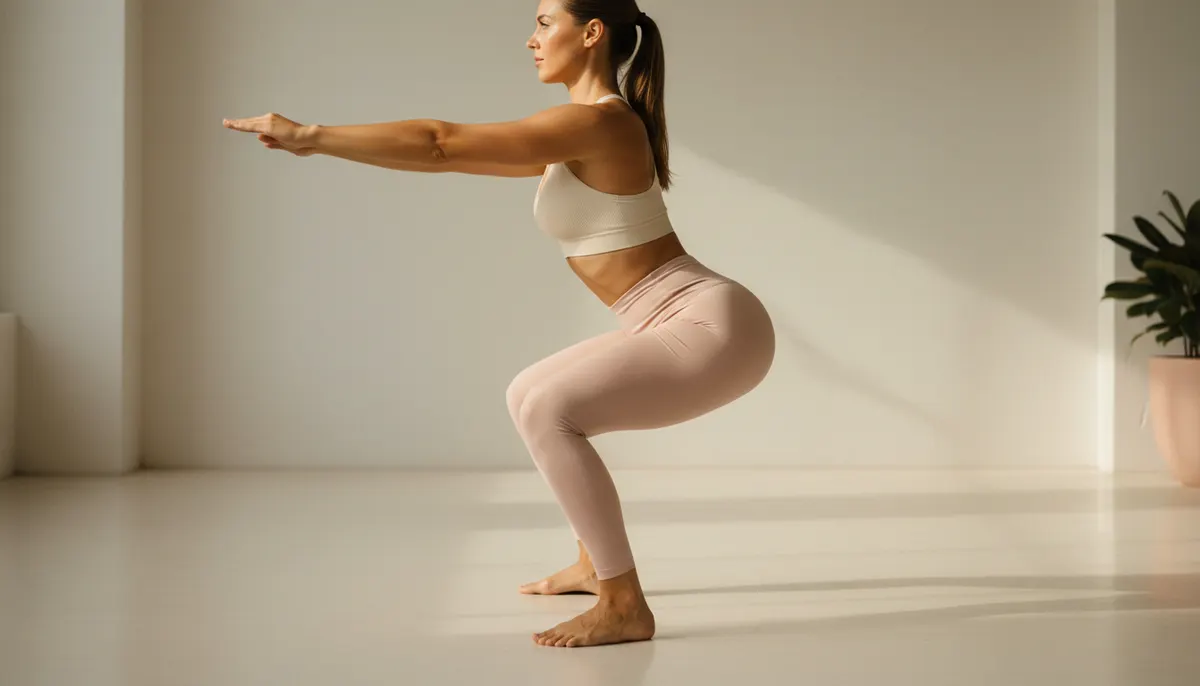
HIIT Squats
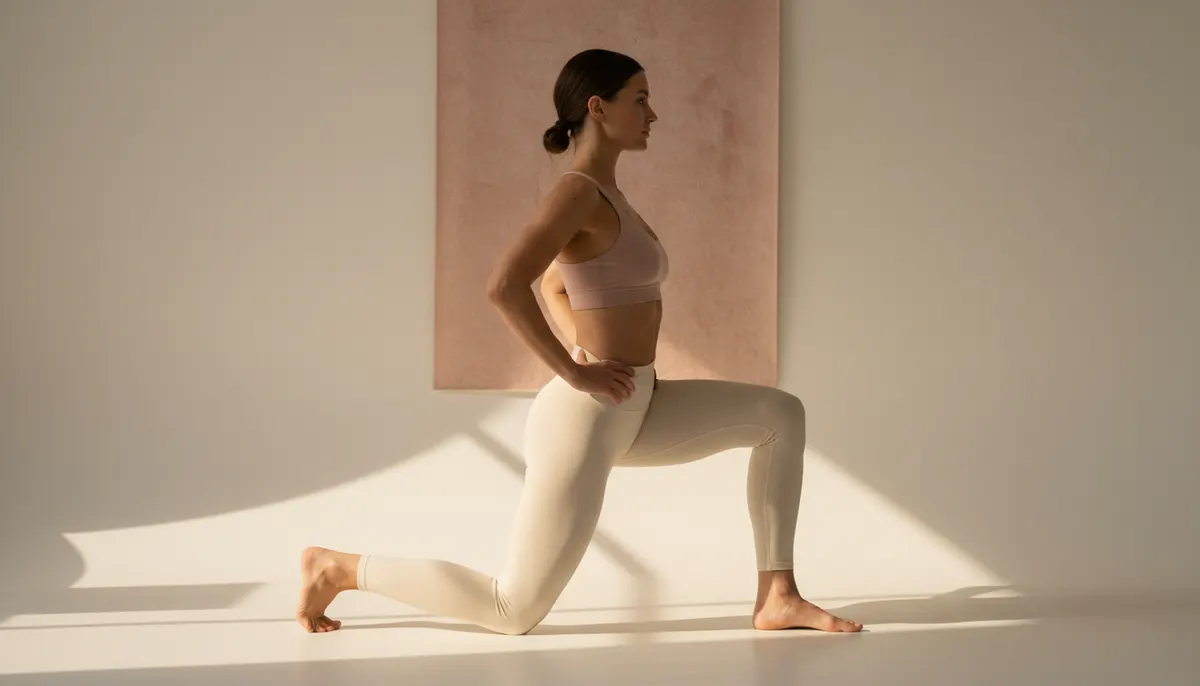
HIIT Lunges
Depending on how long you want to workout for, and your current fitness endurance level, you can choose 2-10 exercises to perform in this manner. Perform one after the other, only when you’ve completed all rounds of the previous exercise.
Work-to-Rest Schemes by Level
The formula above is flexible on purpose, but if you want numbers to start with, use these.
Beginner (1:2 work to rest): 20 seconds on, 40 seconds off. Do 4 to 6 rounds of each exercise and pick 3 or 4 exercises, for 12 to 24 minutes of intervals. The long rest means you can actually go hard during the 20 seconds instead of pacing yourself.
Intermediate (1:1 work to rest): 30 seconds on, 30 seconds off. Do 4 to 6 rounds of each exercise and pick 4 or 5 exercises, for 16 to 30 minutes. The Cardio Queen and Upper Body Burnout workouts below sit in this range.
Advanced (2:1 or 3:1 work to rest): 40 seconds on and 20 off, or 30 on and 10 off like Can’t Stop, Won’t Stop below. Only move here once the 1:1 version no longer leaves you gasping by the last round.
A quick test for whether your ratio is right: if you can hold a conversation during the work interval, the work is too easy or too long. If you cannot finish the final round with the same form you had in the first, the rest is too short.
What Exercises to Choose
The best part about HIIT is that you can use this format for almost any exercise you like. I recommend choosing explosive, whole-body exercises that recruit a variety of large muscles at one time. This helps you make the most out of every movement, without completely burning out one muscle group.
Some explosive full-body exercises to consider include:
- Squats, squat jumps, weighted squats, 1-leg squats
- Jumping jacks
- Skaters
- High knees
- Burpees
- Lunge jumps
- Pushups
- Long jumps
- Stair jumps
- Walkouts (Inchworms)
- Stair jumps
You can use this kind of training to target one specific muscle group or area of the body as well, such as a lower body HIIT workout.
A Sample 20-Minute Session
Here is how the formula looks on an actual clock. After your warm-up, set a 30-on, 30-off timer and work through the exercises one at a time, finishing all rounds of one before you start the next:
- Squats: 30 seconds on, 30 off, 4 rounds (4 minutes)
- High knees: 30 on, 30 off, 4 rounds (4 minutes)
- Walk it off for 1 minute
- Pushups: 30 on, 30 off, 4 rounds (4 minutes)
- Skaters: 30 on, 30 off, 4 rounds (4 minutes)
- Walkouts (Inchworms): 30 on, 30 off, 3 rounds (3 minutes)
That is 20 minutes exactly, no equipment, and it hits your legs, chest, shoulders, and lungs. Beginners can run the same layout at 20 seconds on and 40 off; the clock stays the same and the work drops by a third. If you would rather have every exercise written out with cues and modifications for each level, the full 20-minute no-equipment HIIT workout is that session, ready to follow.
HIIT It Hard
These three workouts are great for both beginner and experienced HIIT-ers; go as fast or slow as is comfortable.
Cardio Queen – 30 minutes: 20 seconds on, 20 seconds off x 4
- Fast feet/Boxer shuffle
- Jump rope
- Yoga ball forward roll
- Yoga ball modified pike
- Pushups wide
- Burpees
- Jump rope
- Weighted lunges
- Plank Up-Downs
Can’t Stop, Won’t Stop – 10 minutes: 30 seconds on, 10 seconds off x 4
- Squat jumps
- Jumping jacks
- Spiderman planks
- Star jumps
- Burpees
Upper Body Burnout – 12 minutes: 30 seconds on, 30 seconds off x 3
- Pushups
- Tricep swing backs
- Arnolds
- Close dumbbell row
How Often to Do HIIT
Two or three sessions a week is the sweet spot for most people, with at least one full day between them. HIIT is demanding by design. It taxes your nervous system and your muscles, not just your lungs, and the adaptations you want (a stronger heart, better endurance, more power) happen while you recover, not while you work. Stack it every day and you will feel it as flat legs, worse sleep, and a heart rate that will not come down.
On the days between, do something easier: a walk, a moderate strength session, yoga, or nothing at all. If your work intervals get slower across a week, that is your body asking for more rest, not more intervals.
How to Progress
HIIT gets easier faster than you expect, and the mistake most people make is to respond by adding time. Progress the intensity instead, one variable at a time, in roughly this order:
- Add rounds (4 becomes 5, then 6).
- Shorten the rest (40 seconds off becomes 30, then 20).
- Lengthen the work (20 seconds on becomes 30).
- Swap in a harder version of the exercise (squats become squat jumps, pushups move from the knees to the toes).
Tempo, rest periods, range of motion, and load all count as progression too, and the five ways to increase the intensity of any workout apply directly to intervals. And when you still have gas left after the last round, finish with the 10-minute abs circuit. It uses the same 20-on, 20-off structure, so it fits right onto the end of a HIIT session.